


Your search for a physical therapy provider is over.
When adults choose how to stay active, they often weigh enjoyment, convenience, and fitness benefits. What’s discussed far less is relative injury risk. No activity is “risk-free,” but the likelihood and type of injury vary meaningfully between sports like running, pickleball, basketball, tennis, golf—and others many adults participate in weekly. Understanding those differences helps adults choose wisely—and train smarter.
Running is one of the most popular adult fitness activities, largely because it’s accessible and inexpensive. Its injury risk is moderate but highly repetitive in nature. Studies commonly estimate roughly 6–12 injuries per 1,000 hours of participation. Most are overuse injuries rather than traumatic ones: Achilles tendinopathy, plantar fasciitis, patellofemoral pain, and bone stress injuries. The risk increases with sudden mileage spikes and poor recovery.
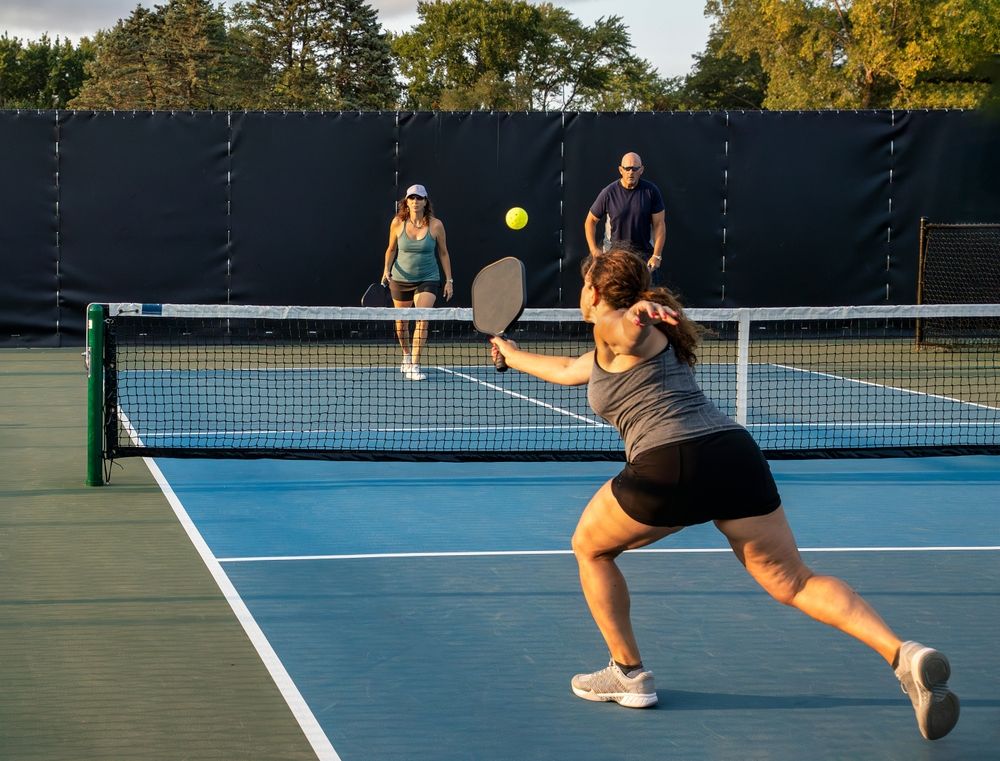
Pickleball has surged among adults over 35. Estimated injury rates range around 2–4 per 1,000 hours. The most common issues are ankle sprains, calf strains, wrist fractures from falls, and Achilles injuries. Because many players are newer to court sports, inadequate lateral conditioning can increase risk.
Basketball sits higher on the injury spectrum, often cited around 6–14 injuries per 1,000 hours in recreational play. It combines sprinting, jumping, cutting, and player contact. Ankle sprains are most common, along with knee injuries such as meniscal tears and ACL ruptures.
Tennis typically falls in the 3–8 per 1,000 hour range depending on level and surface. It demands rotational power and lateral movement. Common injuries include lateral epicondylitis, rotator cuff irritation, calf strains, and Achilles tendinopathy.
Golf is comparatively low risk at roughly 0.3–1.5 per 1,000 hours. Most issues involve low back pain or elbow irritation related to swing mechanics and repetition.
Now consider five additional common adult activities:
Cycling (road or stationary) averages roughly 1–4 injuries per 1,000 hours (higher if including crashes). Overuse knee pain and neck discomfort are common; traumatic injuries occur primarily from falls.
Swimming is one of the lowest-risk aerobic activities at about 0.2–1.0 per 1,000 hours. Shoulder overuse (“swimmer’s shoulder”) is the most frequent complaint.
Soccer (recreational adult leagues) ranges around 8–18 per 1,000 hours, among the highest in common adult sports. Contact, cutting, and sprinting contribute to ankle sprains, hamstring strains, and ACL injuries.
Strength training (general gym lifting) typically falls near 1–3 per 1,000 hours when supervised or performed with proper technique. Most injuries stem from load mismanagement rather than acute trauma.
Yoga is low risk, approximately 0.5–2 per 1,000 hours. Strains occur most often with aggressive stretching or advanced poses attempted too quickly.
| Activity | Estimated Injury Rate (per 1,000 hrs) |
|---|---|
| Soccer | 8–18 |
| Basketball | 6–14 |
| Running | 6–12 |
| Tennis | 3–8 |
| Pickleball | 2–4 |
| Cycling | 1–4 |
| Strength Training | 1–3 |
| Yoga | 0.5–2 |
| Golf | 0.3–1.5 |
| Swimming | 0.2–1.0 |
(Rates vary by study design, age, and level of competition.)
When comparing broadly by relative likelihood, a recreational hierarchy often looks like: soccer → basketball → running → tennis → pickleball → cycling/strength training → yoga → golf → swimming.
However, context is critical. A well-conditioned basketball player may have lower injury risk than a sedentary adult who abruptly begins high-volume running.
Importantly, while running appears relatively high on the injury-rate scale, the vast majority of running injuries are mild to moderate overuse conditions rather than catastrophic trauma. By contrast, higher-impact, cutting, and contact sports—like soccer and basketball—carry a greater risk of acute ligament tears, fractures, and surgical injuries. In other words, frequency does not always equal severity. Proper progression, strength training, and recovery habits meaningfully reduce risk across every activity.

Your search for a physical therapy provider is over.
Call us anytime